Would you like to make this site your homepage? It's fast and easy...
Yes, Please make this my home page!
Science
Educator Project
July 2001
Dr. Marlene
Hapai, University of Hawaii

THE
ROAD TO BECOMING A SCIENCE EDUCATOR....
 ..."I
am a product of my environment."
..."I
am a product of my environment."
Dr. Hapai was raised in a small sugar
cane community. Her uncles were cattle r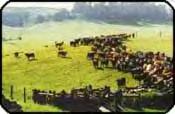 anchors
and raised pigs, one uncle also had a slaughter house. Dr. Hapai
used to watch how cattle were processed and would "help" the meat inspector
- he would show her the difference between good and diseased meat.
She said that "dissipated any squeamishness I might have had."
anchors
and raised pigs, one uncle also had a slaughter house. Dr. Hapai
used to watch how cattle were processed and would "help" the meat inspector
- he would show her the difference between good and diseased meat.
She said that "dissipated any squeamishness I might have had."
High
School Science
During intermediate and high school,
Dr. Hapai did science projects, took four years of science and math and
was selected for a special program as a junior. The program was called
science seminars and scientists spoke to students monthly to give them
exposure to different areas of science.
Dr. Hapai originally did not want
to go into teaching. Her mother was a teacher and as a child, she
felt it took time away from her- much time was required to do a good job.
But once in college, teaching seemed to be the thing to do with a Biology
degree. Dr. Hapai new the ropes of teaching from helping her mom
and was told by her Student Teacher Supervisor that she was the best student
teacher he ever had - she knew she was on the right track.
THE
CAREER
Graduate
Degrees
After receiving a Biology degree, Dr.
Hapai taught for two years. She then began her masters degree in
Entomology, taught for two more years, finished the masters, started her
Ph.D. in Entomology, went back and taught another year, finished the Ph.D.
and then went on to teach Biology at the community college level.
"I
took my graduate degrees in the sciences as I felt this would help me to
further
present science from a scientists standpoint to my high school students."
In addition, Dr. Hapai has a Professional
Certification in high school biology and chemistry and took a number of
education courses.
Achievements
- Just to name a few!
While working on her Ph.D., Dr. Hapai
was hired by the University Lab School to write science curriculum.
She also wrote for the FAST Program, was director of the Writing Team for
the DASH Program and wrote the Insects Books for the Hawaii Nature study
Program. "Bug Play" was written with a music educator to integrate
science and the arts!
Dr. Hapai kept in touch with lower
education throughout her teaching career - she was one of the leaders in
resurrecting the District Science Fair that died 20 years earlier (when
she graduated from high school) and started a degree program in Natural
Sciences for preparing science teachers and a certificate for strengthening
those already in the field.
Associate
Dean for Academic and Student Affairs,
College
of Tropical Agriculture
Work as associate dean focuses around
program planning, recruitment, assessment, and implementation. The
college reorganized just before Dr. Hapai "came on board" and she thought
she would be telling the world about all their great programs- only to
find they were not in place yet! After only a year, Dr. Hapai helped
produce the college's Academic Program Reorganization Plan- which were
approved a week ago. Now it is time to work on brochures, the web
site, and the millions of other details.
"The
goals of my position are program excellence,
national
recognition and increasing student numbers.
Once you
have the program in place, the rest will happen."
At this time, Dr. Hapai is not teaching
courses- her day-to-day challenges, on top of starting a new program, include
answering faculty and chair problems, answer emails, keep-up with what
is going on nationally, and work on long-term projects. She just
submitted a grant proposal to increase the number of Native Hawaiian students
in our college and is coordinating a teaching symposium for the entire
western region.
.... Just to name a couple of tasks!
"My
job is very challenging and I enjoy it."
Dr. Hapai's emails end with the
following quote:
"Let
our commonalities move us forward,
not our
differences hold us back"
This was her explanation-
"I came up with it shortly
after I began this new job. I found many wonderful
people with so much to share unable
to work together because of problems of
one sort or the other in the past.
The advantage that I had as a new
administrator that came from the
outside was that I was not a part of any
of those problems and thus could
move people forward and focus on being a
professional and acting as such,
no matter what the personal problem might
be. Many of these people
came from the same culture and ethnic background,
but I guess you could say, subcultures
form as time goes by even within the
same group that tend to separate
people."
QUESTIONS
ASKED
1. Why did you decide to go
into science, more specifically science education?
2. How would you describe
your career and day-to-day activities? As associate dean, do you
still teach classes?
3. I noticed that you are
involved in teacher preparation and enhancement. Could you go into
a little more detail on the projects you are involved with and any additional
thoughts.
4. If there is anything else
you would like to share- I would love it!
